
Trekking 3 days
& 2 nights
This three-day tour from Imlil to Setti Fattma
This includes 2 overnight stays in the Atlas Mountains
designed as a private experience, featuring exclusive transport,
a dedicated driver, and
an experienced guide
The tour allows for flexibility,
enabling travellers to stop and take
photographs at their leisure
Additionally, it is an all-inclusive package, covering all
necessary expenses during the trip
Overview
DAY 1
- Your private transport and driver will pick you up at your hotel
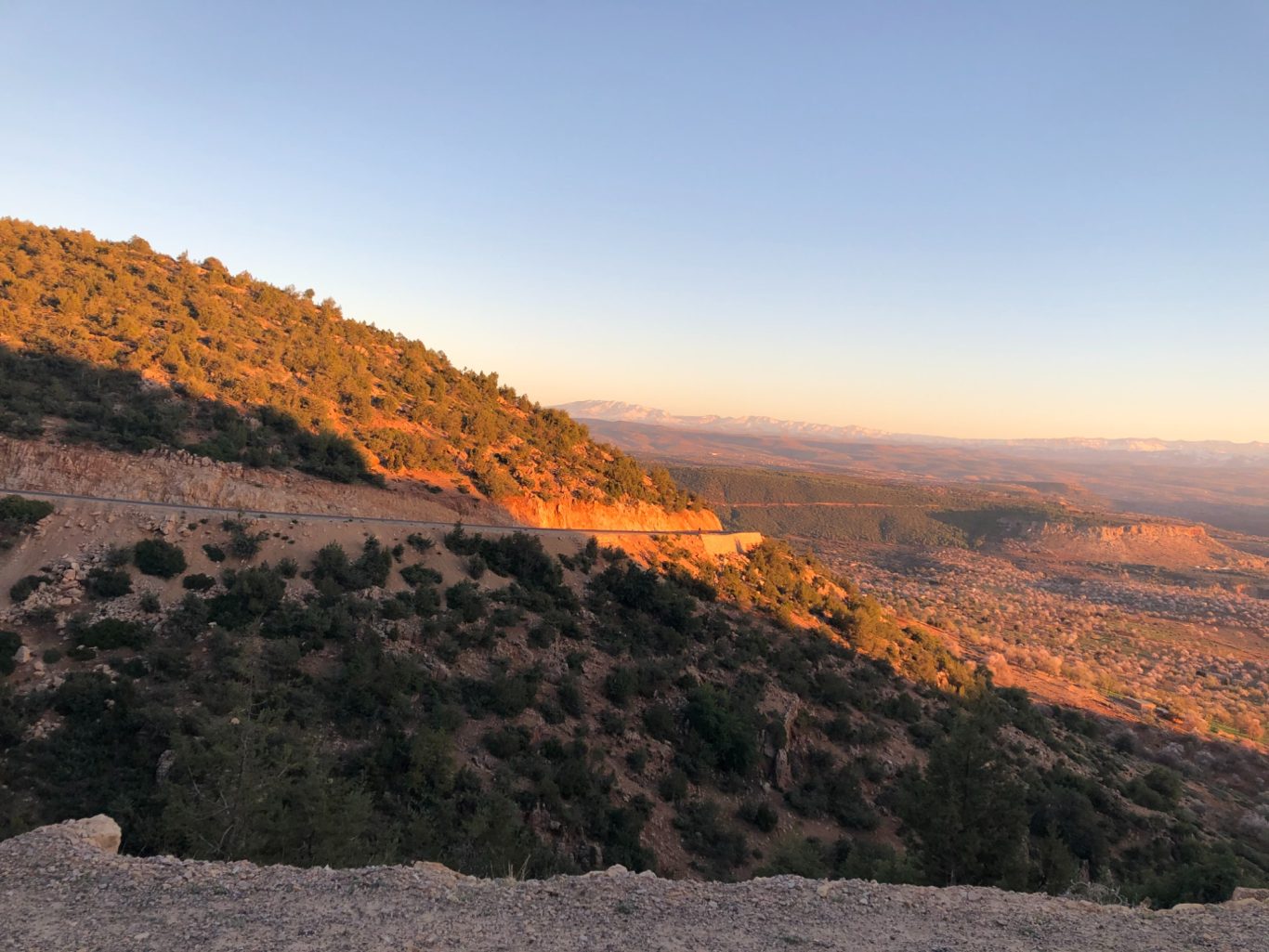
- This is an early start Leaving Marrakech at 8:00 a.m. and take 2-hour drive to Imlil in the Atlas Mountains
- Arriving at Imlil (alt. 1740 m) where the treks starts at around 9:00/9:30 a.m.
- You will meet your mountain guide, mules etc. and trek towards the Imnan Valley, crossing the river and up to Tizi Aguersiwal (alt.2100 m)
- You will be walking for about 5 hours
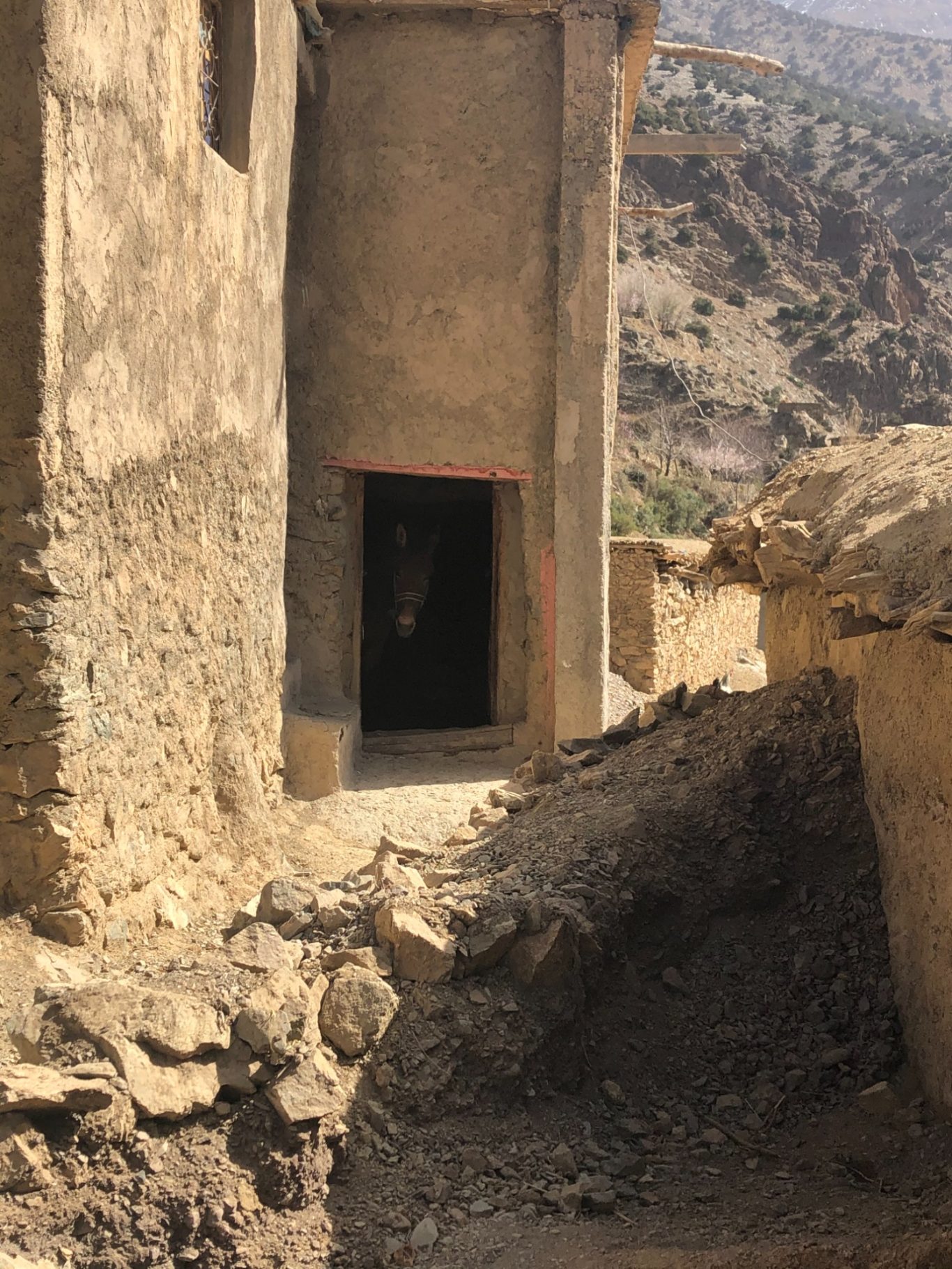
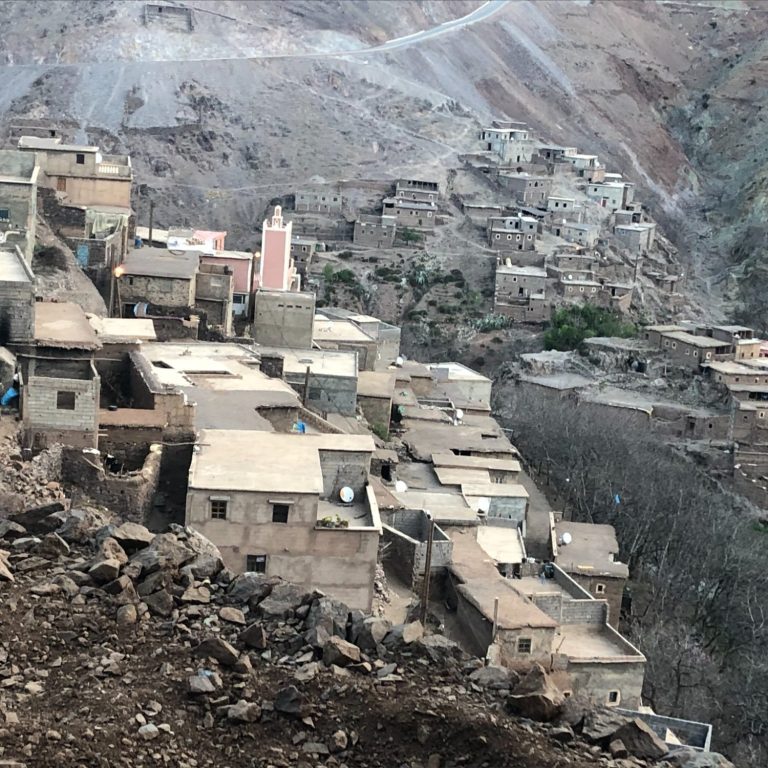
- We will arrive at the village of Ouanesekra in the valley of Tacheddirt where you will spend the night in a Berber House
DAY 2
- After breakfast you will leave Tacheddirt in the morning and head towards Timichi passing by Tizi N'Ibbasen (alt. 3172m)
- We descent the mountain and arrive in the village of Ibbasen
- You will be walking for about 6 hours
- You will stop for lunch there and then continue on to a small village call Timishi
- You will stay in Timishi overnight in a Berber house
- Dinner and breakfast will be prepared at the Berber house during your stay
DAY 3
- In the morning, you will head towards Setti Fattma. This will be around 5 hours walking
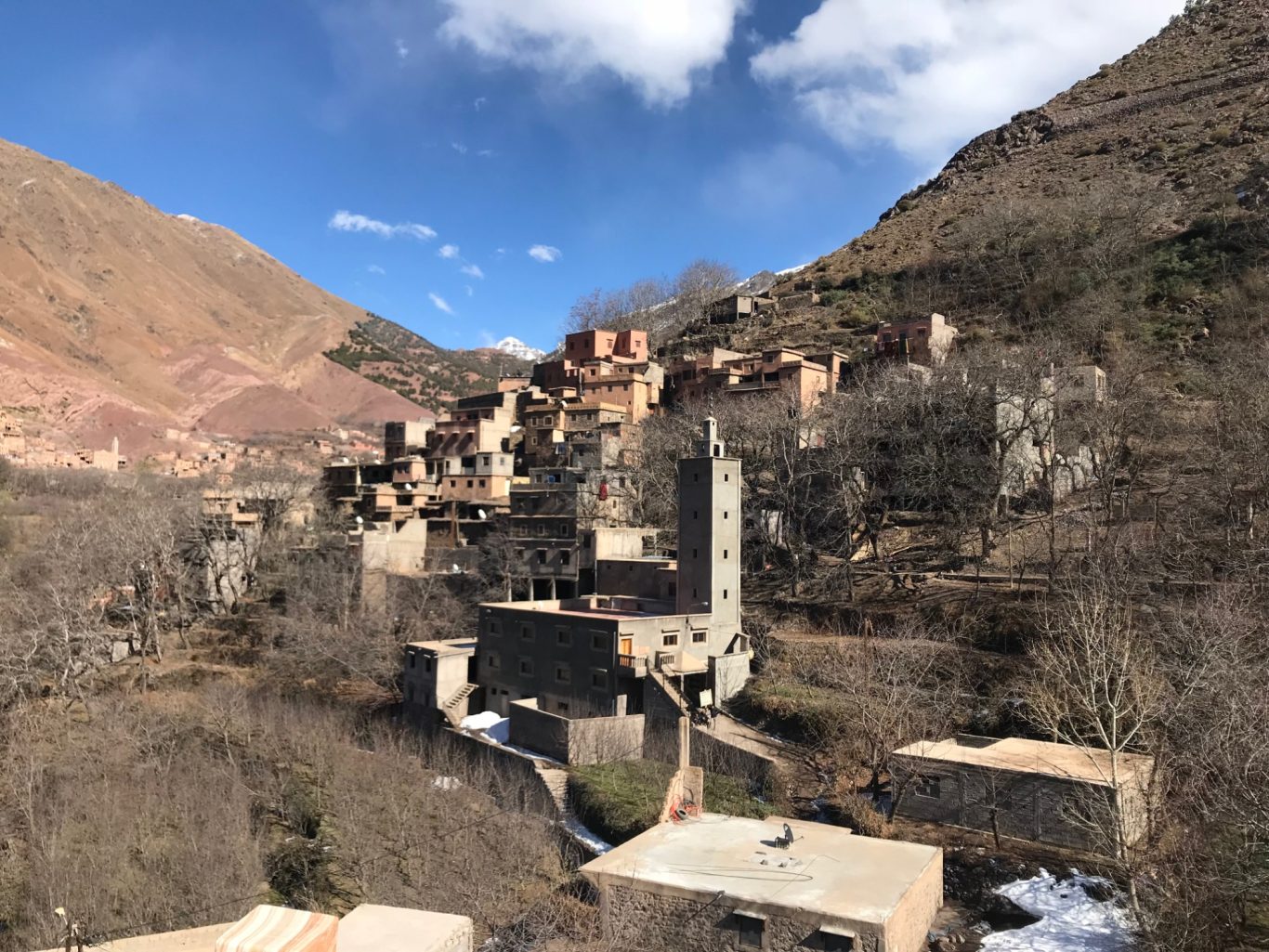
- At every point along the route there are Berber villages scattered all along the valley, such as Tiourdoi, Anfli, Tadrart, Chiker
- After lunch we continue via Agadir n'Ait Boulmane and arrive at the centre of Setti Fattma
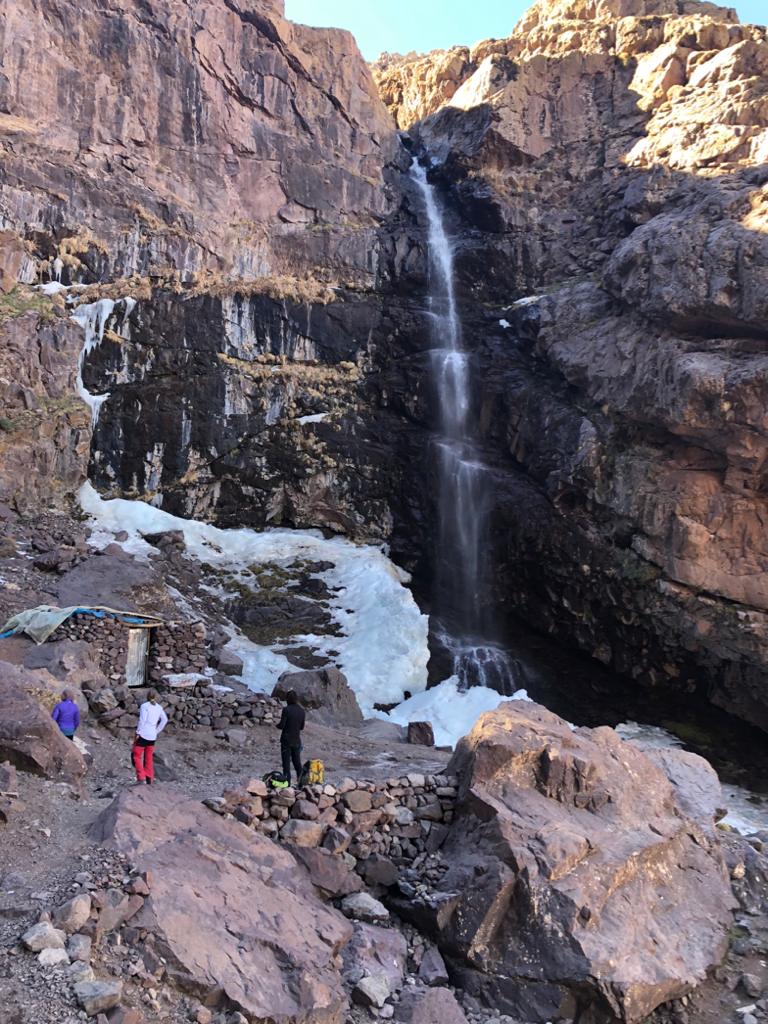
- You will visit the waterfalls
- Afterwards your transport will take you to Marrakech
- You should arrive in Marrakech at around 18:00
Information below for your tour
What's included
- Private transport and driver
- Professional mountain guide
- Small bottle of water each day
- Full board during the trek
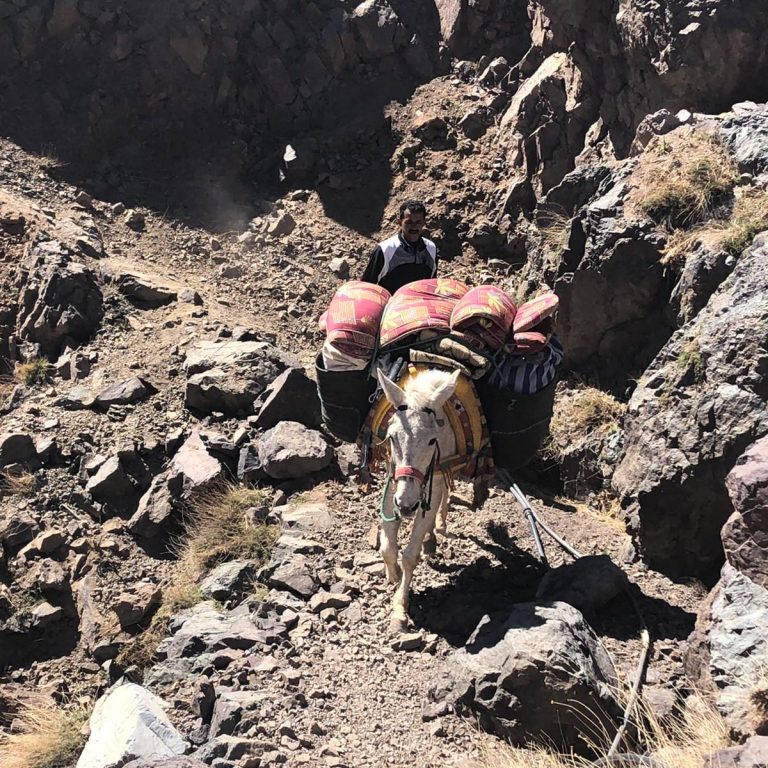
- Mules to carry equipment etc. for the trek plus your rucksack etc.
- You will stay at a local Berber house for 2 nights with dinner and breakfast
- Costs are based on two people
What's not included
- Gratuities and tips (if you wish but not necessary)
- Any drinks/food not included e.g. any additional or food
- Any other expenses not quoted in the What's included section
- Personal expenses
Cost per person
All-inclusive private trek based on minimum of 2 adults
Cost for both options is £150 per person
Discounts are available for larger groups
By purchasing this tour, you confirm that you have read and agree to the Terms & Conditions
Before booking and before you go, please read the notes below
- This is a private tour with private transport and driver, providing a guide at your destination
- It gives you the opportunity to see the countryside outside Marrakech
- Transportation will be arranged at your convenience for pick up at your hotel or Riad
- If your Riad is inside the Medina and is not accessible for a vehicle, a meeting point will be agreed a short walk away
- You will receive pick up details via your WhatsApp or email before the trip
- Upon return to Marrakech you will be dropped off at or near your hotel/Riad
- Please see What's included for this tour
- Cancellation available up to 48 hours the day before your private tour is to commence. So if you book for Thursday you can cancel anytime BEFORE 8:00 a.m. on Tuesday Please refer to the cancellation policy within our Booking Terms & Conditions
Important notes re trekking in Atlas Mountains
Please read before booking and before you go
Equipment
You do not need any specialist equipment for trekking during the summer months but common sense is essential. It is unadvisable that you do not go trekking without the proper shoes and clothing. We have listed below some items that you may wish to have with you on your trek. This list is not exhaustive and you will need to decide what equipment is best for you. Also do remember you will be carrying your rucksack during the trek so dont have too much weight
- Good hiking shoes are essential
- Comfortable clothing - always remember layers are best. Sufficient clothes for your trek and waterproof bag to keep things dry. Good weatherproof clothing will be needed in the winter months
- Gloves for climbing on the rocks to protect your hands
- Headlight for the early mornings when it can be before daybreak when you set off
- Rucksack to carry your equipment/clothes and other essentials during your trip
- Sleeping bag and mat
- Water bottle
- Toilet paper
- Walking poles - many people find these helpful in the mountains particularly in the winter months
- Sunglasses
- Sun hat - the sun can be very strong in the mountains
- Sunscreen, lip balm and insect repellent
- Small first aid kit
- Lightweight compact towel
- Small torch
- In the winter months crampons and ice axes will be needed
Water
As mentioned, it is important to drink plenty of water. Therefore, you need to have sufficient water to drink whilst you are trekking. Make sure you have sufficient bottled water with you and listen to your guide regarding the availability of water. Never drink from mountain streams unless a local says it is safe to do so. Do remember though that you could still become unwell due to the different bacteria. Purification tablets may also come in handy if you are in isolated areas
British & European info for residents
On all of the above matters, UK residents should consultant the Foreign office for up to date information at
https://www.gov.uk/foreign-travel-advice
Other foreign nationals should take a similar approach
Please note it is your responsibility to check these points and listen to the advice from the appropriate government offices
General information & guidance
Trekking in the mountains is usually achievable throughout the year, but usually spring time or later into the autumn can be best. It is warm in the spring and trekking conditions can be ideal. The summer and early autumn can be hot. In the winter the mountain is covered in snow so more equipment will be required and is recommended
We suggest that you have a skilled guide with you for your trek. He knows the mountains and will check out the weather conditions for you. All of our treks use a professional guide who will be with you at all times
However, you must be aware that weather conditions can change and you must listen to your guide and follow his instructions at all times
Your fitness &
walking
Trekking in the mountains outside the winter months is very accessible. However, you really need to be reasonably fit and determined. You must be able to walk for at least 5 or 6 hours per day and able to walk on uneven and rugged terrain. This is not a walk in your local park. Saying that, you do not generally require any specialist equipment or gear BUT you do need to be prepared. See previously for more information on equipment.
If you prefer to have a much more-gentle trek or have limited mobility we would be happy to discuss other options with you so that you can enjoy other trails and passes.
If you decide to go trekking in the winter months, we recommend that you have some prior experience before deciding to trek in the mountains, especially before attempting to trek to Toubkal.
Altitude
During your treks you will be at altitude, ranging from 1700 m up to Toubkal, which is 4167m. Altitude sickness is a possibility. However, severe conditions are very rare, mainly because the highest overnight accommodation is at 3200m. It is possible to experience some mild symptoms, such as head-aches, lack of appetite and mild nausea, especially if you trek up to Toubkal. If you have any symptoms you should speak to your guide, listen to his advice and also take a common-sense approach.
Dehydration
It is important that you drink enough water when on the treks. People generally do not drink enough water but this is even more important when you are trekking up in the mountains. You should be aware that a person generally loses more water than at lower altitudes because of the dry air. This coupled with the fact that people end up being dehydrated because they don’t feel like drinking water. You should look out for any signs of dehydration: being very thirsty and having a dry mouth, tired, headache and/or dizziness. Generally, it is recommended that a person drinks at least 3 litres of water for a 5-hour hike. So, please make sure that you drink plenty of water during your trek.
Sunshine in Morocco
You have come to Morocco to enjoy the sunshine and trek in the mountains. As stated above, you need to make sure you drink plenty of water. It is also very important that you protect yourself from the Moroccan sunshine. If you visit Marrakech, then you will know that you need to have sunblock and keep covered up. However, this is also very important in the mountains and at high altitude. The air is thinner in the mountains and therefore the UV rays can be much more damaging and this can lead to infection, sunburn, or sun stroke. Sun damage as you know can also lead to skin cancer. Make sure you use sunscreen and ensure you reapply it often. Wear clothing to protect your skin and wear a hat.
Animals & insects
When trekking or hiking in Morocco, there are hazardous if not potentially deadly creatures living in the area. Snakes, scorpions and palm rats can all deliver nasty bite. However, it is not a frequent occurrence and most people will never see or be aware of them. Saying that it is advisable to routinely shake out your clothes, shoes and bedding (if camping outside). Common sense is again needed – don’t put your hand into any holes, or under rocks etc.
It is generally accepted that Morocco is considered to be a non-malaria region so inoculation or medication should not be needed.